
Payment acceptance is no longer optional for most businesses. Customers expect to pay with card payments, debit card payments, credit card payments, digital wallets, mobile payments, invoice links, online payments, and POS transactions. That convenience supports sales, but it also creates costs that can quietly reduce profit margins if they are not reviewed regularly.
Learning how to reduce payment processing costs starts with understanding what those costs include. Many merchants look only at the quoted rate, but the real cost of accepting payments may include interchange fees, assessment fees, processor markup, payment gateway fees, transaction fees, monthly fees, chargeback fees, refund fees, PCI-related fees, equipment costs, and software charges.
For small business owners, retailers, restaurants, eCommerce sellers, service providers, and finance teams, payment cost management is not about eliminating every fee. Businesses cannot avoid all payment processing fees if they accept electronic payments.
The goal is to improve visibility, reduce avoidable costs, compare pricing carefully, and build payment practices that protect both margins and customer experience.
A responsible payment processing cost reduction strategy looks at several areas at once. It includes merchant statement review, effective rate calculation, pricing model analysis, staff training, secure transaction handling, chargeback prevention, checkout improvements, payment method mix, and better reconciliation.
When these pieces work together, a business can make smarter decisions instead of chasing the lowest advertised rate.
What Payment Processing Costs Include
Payment processing costs are the expenses a business pays to accept electronic payments. These costs apply when customers use credit cards, debit cards, digital wallets, payment links, invoices, online checkout pages, mobile readers, virtual terminals, or POS systems. The total cost is usually made up of several smaller charges rather than one simple fee.
A typical card payment involves several parties. The customer uses a card or digital wallet. The payment processor routes transaction data. The acquiring bank supports the merchant account. The issuing bank is connected to the customer’s card.
The card network helps move authorization and settlement information between parties. Each part of this payment flow can have related costs.
The most common fee categories include interchange fees, assessment fees, and processor fees. Interchange fees are usually tied to the card-issuing bank. Assessment fees are typically connected to card network activity.
Processor markup is the provider’s added charge for payment services, reporting, support, technology, risk tools, account servicing, and transaction handling.
Businesses may also pay payment gateway fees, monthly account fees, statement fees, batch fees, PCI-related fees, chargeback fees, refund fees, equipment leasing charges, software subscription costs, tokenization fees, payment link fees, and virtual terminal fees. These charges can appear separately or be bundled into a larger rate.
The advertised rate does not always tell the full story. A business may see a low percentage rate but still pay high monthly fees, high per-transaction fees, gateway charges, or extra costs for card-not-present transactions. Another business may pay a higher visible rate but fewer add-on charges.
That is why merchants should review total cost, not just one line item. A clear view of all fees helps business owners lower merchant processing costs without making payment acceptance harder for customers.
Why Payment Processing Fees Vary
Payment processing fees vary because not all transactions carry the same cost, risk, or handling requirements. A card-present transaction at a secure POS terminal may process differently from a keyed transaction entered manually into a virtual terminal.
An online payment may carry different risk characteristics than an in-person tap or chip transaction. A debit card payment may price differently than a rewards credit card payment.
Card type is one major factor. Credit card payments, debit card payments, rewards cards, commercial cards, prepaid cards, and digital wallet transactions may fall into different interchange categories. These categories can affect card processing costs before processor markup is even added.
Transaction method also matters. Card-present transactions often use chip, contactless, or swipe data. Card-not-present transactions include online payments, invoice payments, phone orders, payment links, card-on-file charges, and keyed transactions. Because card-not-present transactions can carry higher fraud and dispute risk, they may cost more.
Business type can also influence cost. Different industries may have different average ticket sizes, transaction volumes, refund rates, chargeback patterns, and fraud exposure. A restaurant with tips and batch adjustments may have different statement patterns than an eCommerce business with shipping disputes or a service business collecting invoice payments.
Average ticket size affects how fixed per-transaction fees behave. A small-ticket merchant may feel a $0.10 or $0.20 transaction fee more heavily than a large-ticket merchant. Transaction volume also matters because high transaction counts can magnify fixed fees, while high card volume can magnify percentage-based fees.
Pricing model plays a major role too. Flat-rate pricing, interchange-plus pricing, tiered pricing, subscription-style pricing, and blended pricing all show costs differently. Some are easier to read, while others offer more detail. No model is automatically best for every business.
Payment gateway setup, fraud tools, settlement practices, refund policies, chargeback management, and reconciliation habits can also affect total cost. Cost reduction starts when merchants understand which factors are structural and which can be improved.
Common Payment Processing Fee Components

Payment processing fees can feel confusing because they are often spread across many line items. Some appear as percentages, some appear as basis points, and others appear as fixed per-transaction or monthly charges.
Understanding the main components helps merchants identify which fees may be negotiable, which are pass-through costs, and which may be caused by operational habits.
Interchange Fees
Interchange fees are one of the largest parts of credit card processing fees. They are commonly connected to the card transaction and are generally paid through the payment system to the card-issuing side. These fees vary based on card type, transaction method, business category, data quality, and other card network rules.
Merchants usually cannot directly set interchange fees. A business cannot simply decide that a rewards card or commercial card should cost less to accept.
However, a merchant may still influence whether transactions qualify correctly by using secure payment methods, entering required data accurately, settling batches on time, and avoiding unnecessary keyed transactions.
Interchange categories are one reason quoted rates can be misleading. A single advertised rate may not explain how different cards actually price behind the scenes. For example, a basic debit card transaction may cost differently than a premium rewards credit card transaction or a commercial card transaction.
Interchange is not always the best place to look for direct negotiation. Instead, businesses should review how interchange is shown on the statement and whether the pricing model clearly separates interchange from processor markup.
Assessment Fees
Assessment fees are different from interchange fees. They are generally connected to card network activity and are usually smaller than interchange, but they still contribute to total card processing costs. These fees may be applied as a percentage of card volume or in other network-related ways.
Assessment fees are often treated as base card acceptance costs. Like interchange, merchants usually do not directly negotiate them in the same way they may negotiate processor markup. However, businesses should still understand that assessment fees exist because they affect the total effective rate.
Some statements clearly show assessment fees. Others bundle them with other costs. When fees are bundled, it can be harder for merchants to see what portion of the bill is base cost and what portion is processor markup.
A careful merchant statement review should check whether assessments are listed separately, summarized, or hidden inside broader categories. Greater visibility helps merchants compare pricing models more accurately and avoid mistaking every fee for provider markup.
Processor Markup
Processor markup is the portion added by the payment processor or service provider for handling payment services. This markup may help cover transaction routing, account support, reporting tools, risk monitoring, customer service, settlement support, payment technology, underwriting, compliance tools, and account maintenance.
Processor markup may appear as a percentage, a per-transaction fee, a monthly fee, or a combination of several charges. It may also be bundled into flat-rate pricing or hidden inside tiered pricing categories. This is often one of the more controllable parts of payment processing cost reduction.
A merchant should review markup carefully because two providers may pass through similar base costs but charge different markups. One may charge more through monthly fees, while another may charge more through per-transaction fees or percentage markup.
The best way to understand processor markup is to compare total fees against card volume and transaction count. If interchange and assessments are visible, separate them from processor fees. If they are not visible, ask for a clearer breakdown before making decisions.
Per-Transaction Fees
Per-transaction fees are fixed charges applied each time a transaction is processed. A business might pay a small fixed fee on every sale, authorization, capture, refund, or gateway event depending on its setup. Even small fixed fees can become meaningful when transaction count is high.
These fees affect businesses differently. A coffee shop, quick-service restaurant, convenience retailer, or small-ticket merchant may run many low-value transactions. In that case, a fixed fee can represent a large share of each sale. A service business with fewer high-ticket invoices may feel the percentage fee more than the fixed transaction fee.
Average ticket size is important when reviewing per-transaction fees. If a merchant processes many small tickets, lowering fixed fees may matter more than lowering the percentage markup. If a merchant processes fewer large tickets, the percentage markup may deserve more attention.
Merchants should also look for duplicate transaction fees, authorization fees, capture fees, batch fees, and gateway transaction fees. A transaction may have more than one related line item.
Monthly and Account Fees
Monthly and account fees are recurring charges that may apply whether the business processes many transactions or only a few. These may include statement fees, account fees, monthly minimums, support fees, reporting fees, PCI-related fees, software fees, equipment fees, or service package fees.
Monthly fees are easy to overlook because they do not always appear in the same section as transaction fees. A merchant may focus on card rates while missing recurring charges that raise the effective rate. This is especially important for seasonal businesses or low-volume merchants.
A monthly minimum can increase cost when processing volume drops. If a business does not generate enough processing fees to meet the minimum, it may be charged the difference. That can make a pricing plan look affordable during busy months but expensive during slower periods.
During merchant statement review, businesses should list every recurring fee and ask whether each one is necessary. Some fees may support useful services, while others may be outdated, duplicated, or tied to tools the business no longer uses.
Gateway and Technology Fees
Gateway and technology fees may apply when a business accepts online payments, invoice payments, payment links, card-on-file payments, recurring billing, or virtual terminal transactions.
These fees can include payment gateway fees, monthly gateway access fees, per-transaction gateway charges, tokenization fees, payment link fees, API fees, fraud tool fees, or account updater fees.
These charges are not always bad. A good gateway setup can improve checkout efficiency, reduce failed payments, support recurring billing, help with fraud prevention, and simplify reconciliation. The issue is whether the business is paying for tools it does not use or missing tools that could reduce operational cost.
For eCommerce businesses, gateway performance can affect more than fees. Poor checkout design can increase abandoned carts, failed attempts, duplicate payments, refunds, and customer service issues. Better payment forms, validation tools, error messages, digital wallets, and fraud filters can reduce hidden costs.
A business should review gateway fees alongside transaction approval rates, decline rates, refund rates, and chargeback patterns. The cheapest gateway setup is not always the best if it creates avoidable payment problems.
Chargeback and Refund Fees
Chargeback fees and refund fees can increase payment costs beyond ordinary transaction charges. A chargeback may include a dispute fee, lost revenue, product loss, fulfillment cost, staff time, documentation work, and potential risk monitoring. Frequent chargebacks can also create account review concerns.
Refunds can also create cost confusion. Some businesses receive processing fee credits on certain refunded transactions, while others may not. Some may pay separate refund fees. The details depend on the processing arrangement, card rules, and provider terms.
Refunds also affect reconciliation. A sale may settle in one batch, while the refund appears later. Partial refunds, voids, cancellations, and returns can make deposits harder to match unless records are organized.
Businesses should review chargeback fees, refund policies, dispute ratios, customer service processes, billing descriptors, return windows, and transaction records. Reducing avoidable disputes and refund confusion can support payment cost management and protect customer trust.
Payment Processing Fee Breakdown Table
The table below summarizes common fee types and how merchants can review them. Actual names may vary by statement format, pricing model, payment processor, gateway setup, and merchant account terms.
| Fee type | What it covers | Who may receive it | When it applies | How merchants can review it |
| Interchange fees | Base card transaction cost tied to card type and transaction details | Issuing side of the card transaction | Most card transactions | Check whether interchange is listed separately by card category |
| Assessment fees | Network-related card acceptance costs | Card network side of the transaction | Card transaction volume or activity | Look for network assessment or dues lines |
| Processor markup | Provider charge for processing, support, reporting, technology, and servicing | Payment processor or service provider | Usually every transaction or monthly | Compare markup separately from base costs when possible |
| Per-transaction fees | Fixed cost per authorization, capture, sale, or gateway event | Processor, gateway, or service provider | Each transaction or event | Divide total fixed fees by transaction count |
| Monthly fees | Account, statement, support, minimum, software, or service fees | Provider, gateway, software platform, or related service | Monthly or recurring | List every recurring charge and confirm its purpose |
| Payment gateway fees | Online payment, virtual terminal, payment link, tokenization, or gateway access | Gateway or technology provider | Online, invoice, recurring, or card-not-present payments | Compare gateway cost against features used |
| Chargeback fees | Dispute handling cost | Processor, acquiring side, or dispute service | When a chargeback occurs | Track disputes by cause, amount, and outcome |
| Refund fees | Cost related to reversing or refunding a payment | Processor or provider | When refunds occur | Review whether transaction fees are returned, retained, or added |
| Batch fees | Cost for closing or settling a batch | Processor or provider | During batch settlement | Check daily batch activity and closing practices |
| PCI-related fees | Security validation, compliance support, or non-validation charges | Provider or compliance service | Monthly, annual, or when compliance is incomplete | Confirm what is required and whether validation is current |
Start With a Merchant Statement Review
A merchant statement review is the first practical step for any business that wants to lower payment processing fees. The statement shows real card volume, total fees, transaction count, average ticket size, card mix, sales channel mix, chargebacks, refunds, gateway fees, monthly fees, and unusual line items.
Start by gathering several months of statements. One month can be misleading if the business has seasonal volume, a large refund, a chargeback spike, a promotional period, or unusual transaction behavior. Reviewing multiple months helps identify trends instead of reacting to one abnormal period.
Look at total card sales first. Then compare total processing fees against total card sales. This gives the effective rate, which is often more useful than the quoted rate. Also review transaction count because per-transaction fees affect high-volume businesses differently than low-volume businesses.
Next, review card mix. A merchant that accepts many rewards cards, commercial cards, keyed payments, online payments, or card-not-present transactions may pay more than a merchant with mostly debit card payments or secure card-present transactions. This does not mean the merchant is doing anything wrong. It simply explains cost behavior.
Finally, review non-transaction fees. Monthly fees, gateway fees, PCI-related fees, statement fees, batch fees, chargeback fees, refund fees, and software charges can raise total cost even when transaction rates look reasonable.
Calculate Your Effective Rate
Effective rate is the total processing fees divided by total card sales. It gives a clearer view of the full cost of accepting payments because it includes percentage fees, transaction fees, monthly fees, gateway fees, chargeback fees, and other statement charges.
For example, if a business processes $40,000 in card sales and pays $1,200 in total processing costs, the effective rate is 3%. This does not mean every transaction costs exactly 3%. It means the total cost across all card activity equals 3% of card sales.
Effective rate is useful because advertised rates may not include every fee. A quoted rate may ignore monthly fees, payment gateway fees, PCI-related charges, chargeback costs, equipment fees, or transaction fees. Effective rate brings those costs into one number.
Merchants should calculate effective rate each month and compare it over time. If the effective rate rises, review whether the cause is lower volume, more online payments, more chargebacks, new monthly fees, higher gateway costs, or pricing changes.
Separate Base Costs From Markup
Base costs usually include interchange fees and assessment fees. Markup includes the processor’s added cost for services, technology, support, reporting, and account management. Separating these categories helps merchants understand what may be controllable.
On interchange-plus pricing, this separation may be easier because interchange and markup are often shown separately. On flat-rate pricing or tiered pricing, the costs may be bundled, making the review less detailed.
This distinction matters because merchants usually have limited control over interchange and assessments. However, they may have more ability to review processor markup, monthly fees, gateway charges, contract terms, and avoidable operational costs.
A business should avoid assuming that every fee is negotiable. It should also avoid assuming that no fees are negotiable. The practical approach is to identify which fees are pass-through, which are markup, which are technology-related, and which are caused by transaction behavior.
Look for Unusual or Recurring Fees
Unusual or recurring fees can quietly increase payment costs. These may include statement fees, monthly minimums, annual fees, batch fees, gateway fees, PCI-related fees, non-validation fees, chargeback fees, refund fees, support fees, software fees, equipment fees, and duplicate charges.
Some recurring fees are valid and useful. For example, a gateway fee may support online checkout, recurring billing, payment links, tokenization, or fraud tools. The question is whether the business actually uses the service and whether the cost matches the value.
Merchants should build a monthly review list. Write down each recurring charge, the amount, the reason for the fee, and whether it is still necessary. If a fee cannot be explained, ask for clarification before assuming it is incorrect.
Businesses should also watch for fees that change over time. A small increase may not seem important, but repeated increases can raise the effective rate over several months.
Understand Your Pricing Model
Your pricing model affects how payment processing fees are shown, understood, and managed. The same business could see very different statement formats depending on whether it uses flat-rate pricing, interchange-plus pricing, tiered pricing, subscription-style pricing, or blended pricing.
No pricing model is best for every business. A new merchant with low volume may value simplicity. A growing business may need more transparency. A high-volume merchant may benefit from detailed cost breakdowns. A seasonal merchant may need to watch monthly fees and minimums carefully.
Flat-Rate Pricing
Flat-rate pricing bundles many costs into one simple rate, often with a fixed percentage and per-transaction fee. This model can be easy to understand because merchants know what they will pay on most transactions without studying interchange categories.
The tradeoff is limited visibility. Since interchange, assessments, and processor markup are bundled together, it can be harder to know whether the business is paying more than necessary for its actual card mix. A merchant with many lower-cost debit transactions may not see the benefit if all transactions are charged at the same blended rate.
Flat-rate pricing may fit businesses that want simplicity, predictable billing, or fast setup. However, as volume grows, merchants should compare total cost using real processing data.
The key is not whether flat-rate pricing is good or bad. The key is whether the total cost makes sense for the business’s card volume, average ticket size, transaction method, and operational needs.
Interchange-Plus Pricing
Interchange-plus pricing separates base card costs from processor markup. A merchant may see interchange fees passed through, plus a clear markup such as basis points and a per-transaction fee. This structure can provide more pricing transparency.
This model can help businesses identify which costs are tied to card type and which costs are added by the processor. It may also make merchant statement review more useful because interchange, assessments, and markup may be easier to compare.
However, interchange-plus statements can be more detailed and harder for beginners to read. A merchant must be willing to review categories, card mix, transaction counts, and monthly fees.
Interchange-plus pricing may be helpful for businesses that want more visibility into payment processing fees, especially if they process meaningful monthly volume. Still, the total cost depends on the markup, monthly fees, gateway fees, transaction behavior, and contract terms.
Tiered Pricing
Tiered pricing groups transactions into categories, often called qualified, mid-qualified, and non-qualified. Each category has a different rate. The challenge is that merchants may not always know which transactions will fall into each tier or why.
A transaction may move into a higher-cost tier because of card type, rewards status, keyed entry, missing data, card-not-present handling, batch timing, or other classification rules. This can make statements harder to evaluate.
Tiered pricing may look simple at first because only a few rates are shown. But it can reduce transparency if many transactions are placed in higher-cost tiers. Merchants should ask how transactions are classified and what causes downgrades.
When reviewing tiered pricing, focus on the percentage of transactions in each tier. If many transactions are mid-qualified or non-qualified, the business should investigate why.
Subscription-Style Pricing
Subscription-style pricing may involve a monthly membership fee plus pass-through transaction costs and a smaller per-transaction markup. This model can be attractive to some merchants because it may separate service cost from transaction cost.
However, it requires careful math. A high monthly fee may make sense for a high-volume business but may be expensive for a low-volume or seasonal merchant. The effective rate should be calculated after including the subscription fee.
A merchant should compare subscription-style pricing against actual card volume, transaction count, average ticket size, and sales channel mix. It should also review cancellation terms, monthly minimums, gateway fees, and any additional account charges.
This model can work well in some situations, but it is not automatically cheaper. The only reliable comparison is based on real statement data.
Reduce Unnecessary Keyed Transactions
Keyed transactions occur when card information is manually entered instead of captured through a secure card-present method. Keyed entry may be necessary for phone orders, certain invoice payments, remote billing, or backup situations. However, avoidable keyed transactions can increase risk and may affect transaction cost categories.
When the card is present, businesses should generally use chip, contactless, or properly configured POS acceptance instead of manual entry. Secure card-present methods help reduce manual errors, improve authorization data quality, and support better fraud prevention.
Businesses can reduce unnecessary keyed transactions by using updated card readers, mobile payment devices, payment links, secure invoices, card-on-file tools, and integrated POS systems. Staff should know when manual entry is appropriate and when it should be avoided.
Service businesses can also reduce manual entry by sending secure invoice links instead of writing card details down or typing them into a terminal later. Mobile businesses can use mobile readers to accept card-present payments at the customer location.
Reducing keyed entry does not mean refusing legitimate remote payments. It means matching the payment method to the situation and avoiding manual entry when better tools are available.
Use Secure Card-Present Payment Methods When Possible

Secure card-present payment methods include chip, tap, contactless cards, digital wallets at the terminal, and properly configured POS transactions. These methods can support better transaction data quality, lower fraud exposure, and smoother checkout.
Secure in-person acceptance can also reduce manual errors. A typed card number can be entered incorrectly. A payment taken through a chip or contactless reader captures transaction data directly through the payment device, reducing the chance of mistakes.
For retailers, restaurants, mobile sellers, and service providers that meet customers in person, secure card-present tools can improve both customer experience and payment cost management. Customers usually prefer quick, familiar payment options, and businesses benefit from stronger transaction handling.
Train Staff on Proper Payment Entry
Staff training is one of the simplest ways to support payment processing cost reduction. Employees should know when to tap, insert, swipe, key, void, refund, or ask for another payment method. They should also understand why manual entry should not be the default when the card is present.
Training should include common situations. What happens if the chip fails? When should a transaction be voided instead of refunded? How should tips be adjusted? How should a payment link be sent? What should staff do if a customer disputes a charge or asks for a receipt?
Good training protects more than fees. It reduces checkout delays, duplicate payments, customer confusion, refund errors, and chargeback risk.
A short payment handling guide near the POS can help new employees follow the correct steps during busy periods.
Avoid Manual Entry When the Card Is Present
Manual entry may be convenient in the moment, but it can create avoidable issues. When the card is physically present, entering card details by hand may increase risk, reduce data quality, and affect how the transaction is categorized.
Sometimes manual entry happens because the terminal is not working, staff are rushed, or the business lacks mobile equipment. These are operational issues that can often be fixed with better devices, backup processes, or training.
If manual entry is frequent, review the reason. Are readers failing? Are employees unsure how to use tap or chip? Are phone orders being processed through the wrong workflow? Are invoices being collected in person but entered later?
Avoiding unnecessary manual entry helps businesses reduce credit card processing fees responsibly while improving payment security and checkout consistency.
Settle Batches on Time
Batch settlement is the process of closing a group of authorized transactions so they can move toward funding. For many businesses, this happens at the end of the business day. Timely settlement supports cleaner reporting, better reconciliation, and more consistent transaction handling.
Delayed settlement can create confusion. Authorizations may remain open, tips may not be adjusted correctly, reports may not match deposits, or transaction data may become harder to track. In some cases, delayed capture or late batch settlement may affect how transactions are processed.
Timely settlement does not guarantee lower costs in every situation. However, it can help transactions process correctly and reduce operational problems. This is especially important for restaurants, service businesses, lodging-related transactions, mobile businesses, and merchants that adjust tips or finalize payments after authorization.
Businesses should create a batch close routine. The routine should include verifying totals, checking tips or adjustments, confirming voids, reviewing refunds, closing the batch, and saving settlement reports. Finance or accounting teams should compare batch totals to bank deposits and processor reports.
If a business uses multiple locations, mobile devices, online channels, or payment gateways, settlement timing should be reviewed by channel. Different systems may close batches at different times, which can make reconciliation harder.
Improve Payment Gateway and Checkout Efficiency
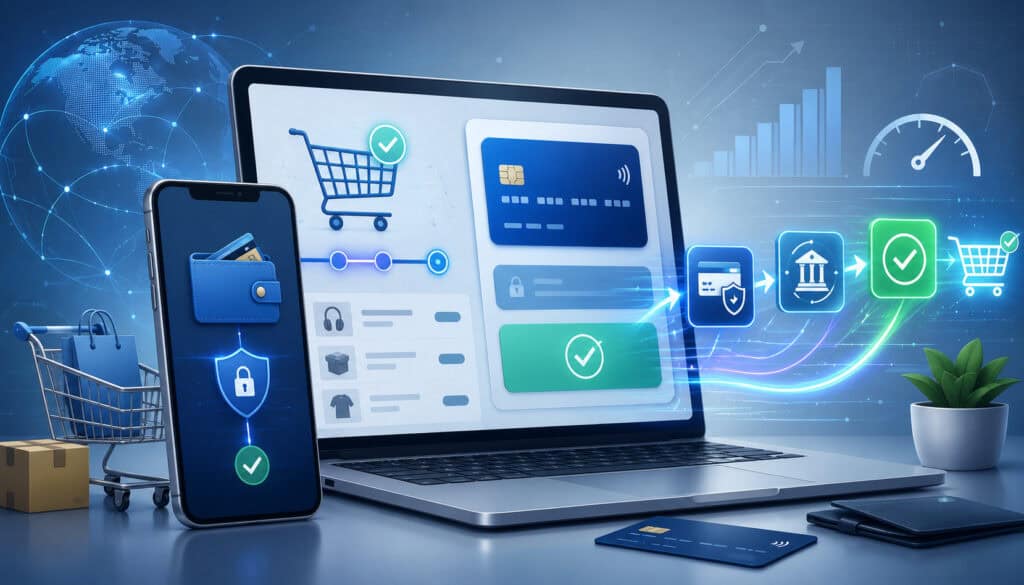
Payment gateway and checkout efficiency can reduce hidden costs by preventing failed payments, duplicate attempts, abandoned checkouts, fraud reviews, refunds, and chargebacks. Gateway cost is not only about the monthly fee. It is also about how well the payment system supports accurate, secure, and convenient payments.
Online checkout pages should be clear and easy to complete. Customers should understand billing fields, shipping fields, accepted payment methods, taxes, fees, delivery terms, refund rules, and confirmation steps before payment. Confusing checkout pages can lead to failed attempts, duplicate payments, or disputes.
Digital wallets may reduce friction for mobile shoppers because customers can pay without typing card details. Address verification, CVV checks, card validation, fraud filters, and helpful error messages can also improve payment quality.
Reduce Failed Payment Attempts
Failed payment attempts can create extra work and poor customer experience. They may also lead to duplicate attempts, abandoned carts, customer support tickets, and confusion about whether an order was placed.
Businesses can reduce failed attempts by making payment forms clear, using accurate billing fields, enabling real-time validation, providing helpful error messages, and offering alternative payment options where appropriate. For recurring billing, account updater tools and retry logic may help reduce involuntary payment failures.
Not every failed payment is avoidable. Cards expire, banks decline transactions, customers enter incorrect details, and fraud filters may block risky payments. Still, payment analytics can show whether declines are unusually high.
A business should track decline rates by sales channel, payment method, and gateway setup. If one checkout path has more failures than others, review the form, fraud settings, device experience, and customer instructions.
Review Gateway Add-On Fees
Gateway add-ons can be valuable, but they should be reviewed. Businesses may pay for tokenization, recurring billing, fraud filters, payment links, hosted checkout, account updater tools, advanced reporting, API access, or virtual terminal features.
The right question is not simply “Can this fee be removed?” The better question is “Does this feature reduce risk, save staff time, improve checkout, or support revenue collection?” A fraud filter may have a cost, but it may also prevent chargebacks. A recurring billing tool may cost extra but reduce missed payments.
At the same time, unused tools should be questioned. If a business pays for recurring billing but does not run subscriptions, or pays for advanced gateway features it never uses, those fees may be unnecessary.
Review gateway invoices and merchant statements together. Some gateway fees appear on separate bills, which means they may be missed during payment processing cost review.
Manage Chargebacks to Reduce Avoidable Costs
Chargebacks can increase payment processing costs in several ways. A merchant may pay a dispute fee, lose the transaction amount, lose the product or service value, spend staff time gathering documents, and face higher risk review if disputes become frequent.
Chargebacks may happen because of fraud claims, delivery issues, product dissatisfaction, refund delays, unclear billing descriptors, duplicate charges, subscription confusion, service disputes, or customer service gaps. Some chargebacks are unavoidable, but many can be reduced with better communication and documentation.
Use Clear Billing Descriptors
A billing descriptor is the name customers see on their card statement. If the descriptor is unclear, customers may not recognize the charge and may dispute it instead of contacting the business.
A clear descriptor should match the name customers know. If the legal entity name is different from the storefront, website, or service brand, the business should review whether the descriptor causes confusion. Phone numbers or support references may also help when supported.
Billing descriptor issues are common for online payments, multi-location businesses, mobile businesses, and businesses operating under multiple trade names.
A recognizable descriptor can reduce avoidable disputes and customer service confusion. It is a simple detail that can have a meaningful impact.
Keep Strong Transaction Records
Transaction records help businesses respond to disputes and manage refunds. Useful records may include receipts, invoices, signed agreements, delivery proof, shipping confirmation, customer messages, service notes, refund logs, order details, and payment confirmations.
For card-present transactions, receipts and POS records can support dispute review. For eCommerce transactions, delivery confirmation, tracking information, fraud checks, checkout data, and customer communications may be important. For service businesses, signed work approvals and completion notes can help.
Good records also improve reconciliation. Finance teams can match payments, refunds, chargebacks, and deposits more easily when documentation is organized.
A business should store records in a consistent system and make sure staff know where to find them if a dispute arrives.
Improve Refund and Customer Service Policies
Some chargebacks begin as unresolved customer service issues. A customer may dispute a transaction if they cannot reach the business, do not understand the refund policy, or feel their concern is being ignored.
Clear refund policies can reduce confusion. Customers should know return windows, cancellation terms, restocking fees, service conditions, delivery timelines, and how refunds are processed. These policies should be visible before payment, not only after a problem occurs.
Responsive customer service can also prevent disputes. If a customer receives a quick answer, clear timeline, or documented resolution, they may be less likely to file a chargeback.
This does not mean every refund request must be approved. It means the policy should be clear, consistent, and documented.
Reduce Refund-Related Cost Confusion
Refunds affect payment processing costs, deposits, customer trust, and accounting records. A refund may not always reverse every fee connected to the original transaction. Some providers may retain certain fees, some may charge refund fees, and some may handle partial refunds differently.
A void is different from a refund. A void usually cancels a transaction before settlement. A refund typically reverses a payment after settlement. This distinction matters because voids and refunds may appear differently on statements, reports, and customer accounts.
Order cancellations, returns, duplicate charges, partial refunds, and service adjustments should be documented carefully. Without good documentation, accounting teams may struggle to match net deposits, refund batches, customer credits, and sales reports.
Businesses can reduce refund confusion by using clear return policies, accurate product descriptions, confirmation emails, delivery updates, and customer support records. For subscriptions, renewal reminders and cancellation instructions can help reduce unwanted billing disputes.
Refund trends should also be reviewed. A rising refund rate may indicate product issues, unclear checkout information, fulfillment delays, service mismatches, or customer expectation problems. Fixing the root cause can reduce both direct refund costs and related chargeback risk.
Compare Payment Methods by Cost and Use Case
Not every payment method has the same cost, speed, customer experience, or risk. A balanced payment strategy compares card payments, debit cards, digital wallets, ACH payments, invoice payments, mobile payments, and payment links based on how customers buy and how the business operates.
The lowest-cost payment method is not always the best option. If a payment method creates friction, customers may abandon checkout, delay payment, or choose a competitor. Cost reduction should be balanced with convenience, security, settlement timing, and customer trust.
Card Payments
Card payments are convenient, familiar, and widely used. They support in-person sales, online payments, mobile payments, invoice payments, and recurring billing. However, they include several fee components, including interchange fees, assessment fees, processor markup, transaction fees, and possible gateway fees.
Credit card payments may cost more than some other methods because of rewards programs, risk handling, and card network structures. Debit card payments may behave differently depending on card type and transaction method.
Businesses should not assume card payments are bad simply because they carry fees. Cards can increase sales, improve cash flow, support faster checkout, and meet customer expectations. The goal is to manage card processing costs responsibly.
ACH or Bank-Based Payments
ACH payments or bank-based payments may fit invoices, recurring payments, larger transactions, membership dues, rent-like payments, professional services, or B2B payments. These options may have different fee structures than card payments.
ACH can be useful when customers are comfortable paying from a bank account and when the business can handle settlement timing and return risk. It may not fit every retail or quick-checkout environment because customers may prefer cards or wallets.
Businesses should compare ACH costs, return fees, verification tools, authorization requirements, settlement timing, and reconciliation needs before adding it as an option.
For larger invoices, offering a bank-based payment option may help reduce credit card transaction costs while still giving customers a convenient electronic payment path.
Digital Wallets
Digital wallets can improve checkout speed, especially for mobile shoppers and in-person contactless transactions. Customers may prefer tapping a phone or using saved payment credentials instead of typing card data.
Costs can vary depending on setup, transaction type, and wallet funding source. A wallet transaction may still ride card rails, which means card processing costs may apply. However, wallets can reduce friction and may support better payment completion rates.
Digital wallets can also improve customer experience by making checkout faster and reducing form-entry errors. For mobile commerce, that convenience can protect sales.
Businesses should review wallet acceptance costs, gateway support, POS compatibility, fraud settings, and reporting details.
Invoice and Payment Link Options
Invoices and payment links help service businesses, contractors, consultants, repair businesses, professional services, and mobile businesses collect payment remotely. They can reduce manual entry and make payment easier for customers.
However, invoice and payment link transactions are often card-not-present. That means costs may differ from in-person card-present transactions. Merchants should review pricing, gateway fees, payment link fees, card-on-file costs, and refund handling.
Payment links can still be valuable if they reduce late payments, improve cash flow, and create better documentation. The key is to compare cost against operational benefit.
A service business should also consider offering more than one payment option for larger invoices, such as card payments and bank-based payments where appropriate.
Review Average Ticket Size and Transaction Count
Average ticket size and transaction count strongly affect payment costs. A business with many small transactions may be more affected by fixed per-transaction fees. A business with fewer large transactions may be more affected by percentage fees and commercial card costs.
For small-ticket transactions, a $0.10 or $0.20 per-transaction fee can represent a meaningful share of the sale. For example, the fixed fee matters more on a $5 sale than on a $500 sale. Retailers, coffee shops, quick-service restaurants, food businesses, and convenience-style businesses should pay close attention to fixed fees.
For large-ticket transactions, percentage-based costs can become substantial. A service business, B2B merchant, or high-ticket retailer may focus more on processor markup, commercial card costs, ACH options, and invoice payment strategy.
Some businesses consider minimum purchase policies, bundled purchases, or pricing adjustments to offset small-ticket card costs. Any such practice should be reviewed carefully for applicable rules, customer communication, and local requirements. Customers should not be surprised at checkout.
Average ticket size should also be compared by sales channel. In-person average tickets may differ from online orders, invoices, mobile payments, or recurring billing. Each channel may have its own cost pattern.
Reduce Payment Processing Costs Without Hurting Customer Experience
The cheapest payment setup is not always the best business decision. If a cost-saving change creates checkout friction, limited payment options, unclear pricing, slower service, or customer frustration, the business may lose more in sales than it saves in fees.
Payment cost management should balance cost, convenience, security, speed, and trust. Customers want payment options that feel familiar and reliable. Businesses need payment tools that support accurate reporting, fast checkout, fraud prevention, and predictable cash flow.
Keep Checkout Simple
A simple checkout protects sales. Customers should be able to understand the total price, choose a payment method, complete the payment, and receive confirmation without confusion.
Too many steps can increase abandonment. Missing payment options can frustrate customers. Unclear error messages can cause duplicate attempts. Slow terminals can create lines and reduce customer satisfaction.
A business can reduce payment costs while still keeping checkout simple. For example, it can train staff to use secure card-present methods, add digital wallets, reduce manual entry, improve payment forms, and offer bank-based options for suitable invoice payments.
The goal is not to push customers into inconvenient choices. The goal is to offer smart payment paths that work for both the customer and the business.
Be Transparent About Payment Policies
Transparent payment policies reduce confusion and support trust. Customers should understand accepted payment methods, refund rules, receipt options, billing descriptors, pricing policies, and any payment-related terms before completing a transaction.
If a business uses cash discount, dual pricing, or surcharge-related programs, clear disclosure is especially important. Customers should not discover pricing differences only after they reach the payment step.
Transparency also helps staff. Employees can answer customer questions more confidently when policies are documented and consistent.
Payment pricing, refund rules, and accepted methods should be visible on receipts, invoices, checkout pages, signage, or service agreements where appropriate.
Consider Cash Discount, Dual Pricing, or Surcharge Programs Carefully
Some businesses explore cash discount, dual pricing, or surcharge programs to recover or offset card acceptance costs. These programs can affect customer pricing, checkout communication, signage, receipts, debit card handling, and card network compliance.
This section is educational only and is not legal or financial advice. Rules can vary by payment type, card brand, transaction method, jurisdiction, and program structure. Businesses should review applicable requirements and seek qualified guidance before implementing any pricing program.
Cash Discount Programs
A cash discount program generally offers a lower price to customers who pay with eligible non-card methods. The idea is to reward a lower-cost payment method rather than surprise customers with a fee after the fact.
A properly structured program should be transparent. Customers should clearly understand the posted price, discount conditions, accepted payment methods, and final amount before payment.
Cash discount programs may not fit every business. Some customers prefer cards for rewards, convenience, budgeting, or purchase protection. If the program is poorly explained, it may create friction.
Businesses should evaluate customer expectations, signage, receipt language, POS configuration, and staff training before considering this approach.
Dual Pricing Programs
Dual pricing generally shows two prices, such as a cash price and a card price, so customers can choose based on clear pricing. This can be more transparent than adding a surprise fee at the end of checkout.
Dual pricing requires careful setup. Prices should be displayed consistently on menus, shelves, invoices, checkout screens, receipts, and customer-facing materials where required. Staff should be trained to explain the pricing structure clearly.
This model may work better in some environments than others. Retail stores, restaurants, and service businesses may need different display methods.
Businesses should review the full customer experience before implementing dual pricing. A confusing setup can create complaints and disputes.
Surcharge Programs
A surcharge program may add a fee to eligible credit card transactions where permitted and properly disclosed. Surcharge rules can be complex, and debit card restrictions are especially important.
Businesses must review card network rules, signage requirements, receipt requirements, registration requirements, jurisdictional rules, and POS capabilities before considering surcharging. Poor setup can create compliance risk and customer dissatisfaction.
Surcharging should never be treated as a casual checkout add-on. It requires careful communication and accurate technology configuration.
For many businesses, the first step is not a surcharge program. It is statement review, effective rate calculation, fee analysis, and operational improvement.
Improve Fraud Prevention to Reduce Hidden Costs
Fraud can increase payment costs through chargebacks, lost products, fulfillment expenses, manual review, customer support time, payment holds, and risk monitoring. Fraud prevention is therefore part of payment processing cost reduction, not only a security concern.
For online payments, businesses may use address verification, CVV checks, fraud filters, velocity checks, order review rules, delivery confirmation, customer authentication tools, and secure checkout pages. The right settings depend on the business model, average order value, shipping method, and fraud exposure.
For in-person payments, secure card-present methods, updated terminals, staff training, receipt handling, and device inspection can reduce risk. Employees should know how to handle suspicious transactions, declined cards, fallback methods, and unusual customer behavior.
Fraud tools should be balanced. Filters that are too loose may allow bad transactions. Filters that are too strict may reject good customers. Payment analytics can help identify whether declines, fraud reviews, or chargebacks are rising.
Payment security also supports customer trust. Businesses that protect payment data, use secure systems, and follow recognized payment security practices reduce the risk of expensive incidents.
Use Payment Analytics to Find Cost Patterns
Payment analytics helps businesses identify cost drivers instead of guessing. Useful metrics include effective rate trends, card mix, payment method mix, transaction volume, refund rate, chargeback rate, decline rate, gateway fees, batch settlement timing, and sales channel differences.
Analytics can reveal whether costs are rising because of more online payments, more premium credit cards, more refunds, more chargebacks, new monthly fees, or changes in average ticket size. This helps businesses choose targeted improvements.
Track Costs by Sales Channel
In-person, online, mobile, invoice, recurring, and card-on-file transactions may have different cost patterns. A business that looks only at total fees may miss the channel causing the increase.
For example, online payments may carry more gateway fees and fraud review costs. Invoice payments may have more card-not-present fees. Mobile payments may include more keyed transactions if staff do not have proper readers.
Tracking by channel helps businesses make practical changes. An eCommerce checkout may need better fraud filters. A mobile team may need card readers. A service business may need secure payment links instead of manual entry.
Channel-level reporting also helps multi-location and multi-department businesses compare performance more fairly.
Track Costs by Payment Method
Credit cards, debit cards, digital wallets, ACH payments, keyed payments, and card-on-file transactions can affect costs differently. Understanding payment method mix helps merchants evaluate customer behavior and cost opportunities.
A business may find that many large invoices are paid by credit card even when bank-based payment options would work. Another may find that digital wallets improve mobile conversion despite card-related fees.
Payment method tracking should include both cost and customer impact. A low-cost option that customers do not use may not help. A higher-cost option that supports more completed sales may still be valuable.
The goal is to offer payment methods that match transaction type, customer preference, risk level, and business economics.
Track Monthly Cost Trends
Monthly trends reveal fee increases, seasonal changes, chargeback spikes, refund patterns, or changes in customer payment behavior. A one-time review is helpful, but ongoing review is better.
Businesses should track total card sales, total fees, effective rate, transaction count, average ticket size, refunds, chargebacks, gateway fees, monthly fees, and payment method mix. This can be done in a spreadsheet, accounting system, dashboard, or payment reporting tool.
Trend review helps catch problems early. A sudden increase in effective rate may come from new fees, lower volume, more card-not-present payments, or a chargeback event.
Regular review also improves decision-making during contract renewals, pricing discussions, software changes, and expansion planning.
Payment Processing Cost Reduction Checklist
Use this checklist during monthly payment reviews. It helps businesses move from general concern to specific action.
| Checklist item | Why it matters | Review frequency |
| Review merchant statement | Shows real fees, volume, and transaction behavior | Monthly |
| Calculate effective rate | Measures total processing cost as a share of card sales | Monthly |
| Identify pricing model | Helps explain how fees are structured | Quarterly or when pricing changes |
| Separate base costs from markup | Shows which costs may be more controllable | Monthly |
| Review monthly fees | Finds recurring costs that may be unnecessary | Monthly |
| Check payment gateway fees | Identifies online, invoice, and technology costs | Monthly |
| Reduce avoidable keyed transactions | Helps reduce risk and manual-entry issues | Ongoing |
| Train staff on payment entry | Improves checkout accuracy and consistency | Ongoing |
| Settle batches on time | Supports cleaner processing and reconciliation | Daily |
| Monitor chargebacks | Reduces dispute costs and risk concerns | Monthly |
| Track refunds | Improves reconciliation and customer policy review | Monthly |
| Compare payment methods | Helps match cost to customer use case | Quarterly |
| Monitor failed payments | Finds checkout, gateway, or fraud-filter issues | Monthly |
| Reconcile deposits | Confirms fees, refunds, batches, and deposits match | Weekly or monthly |
| Review contract terms | Identifies cancellation, equipment, and pricing-change terms | Before renewal or changes |
Payment Cost Strategies for Different Business Types
Payment cost management is not the same for every business. A restaurant, eCommerce store, service provider, subscription business, and B2B merchant may all need different strategies because customer behavior, transaction size, refund patterns, and sales channels differ.
Retail Stores
Retail stores should review in-person payment costs, debit card mix, average ticket size, refunds, contactless payments, and store-level statements. Because many retail transactions are card-present, secure POS setup and staff training are important.
Retailers should reduce unnecessary keyed transactions, keep terminals updated, review batch settlement, and compare costs by location or department. They should also track returns and refunds because return-heavy categories can affect reconciliation and net deposits.
If a retailer has many small-ticket transactions, per-transaction fees deserve special attention. If it sells higher-ticket goods, percentage markup and card mix may matter more.
Clear receipts and recognizable billing descriptors can also reduce customer confusion and disputes.
Restaurants and Food Businesses
Restaurants and food businesses should review tips, batch settlement, adjustments, online ordering, delivery payments, chargebacks, and small-ticket transaction patterns. Tip adjustments and end-of-day batch practices can affect reporting and reconciliation.
Because restaurants often process many transactions, fixed per-transaction fees can add up quickly. Online orders and delivery-related payments may also carry different costs than in-person dining transactions.
Staff should be trained on closing checks, adjusting tips, voiding errors, refunding correctly, and settling batches. Mistakes during busy service periods can create duplicate payments or customer complaints.
Restaurants should also review whether online ordering systems, payment gateways, or delivery integrations add separate technology fees.
eCommerce Businesses
eCommerce businesses should focus on gateway fees, fraud tools, card-not-present costs, refunds, chargebacks, checkout performance, and payment method mix. Online sellers often face higher fraud and dispute exposure than card-present businesses.
Checkout clarity matters. Product descriptions, shipping timelines, return policies, billing descriptors, digital wallet options, and confirmation emails can all affect disputes and refunds.
Fraud settings should be reviewed carefully. Too little protection can increase chargebacks. Too much friction can block good orders or increase abandonment.
ECommerce merchants should track decline rates, failed attempts, refund reasons, chargeback reasons, and payment method performance by device type and sales channel.
Service Businesses
Service businesses should review invoice payments, deposits, keyed transactions, card-on-file payments, mobile payments, and payment links. Many service businesses collect payments remotely, which can increase card-not-present activity.
Secure invoice links can reduce manual entry and create better documentation. Deposits and staged payments should be clearly described in service agreements and invoices.
For larger invoices, service businesses may consider offering bank-based payment options where appropriate. This can give customers flexibility while helping the business manage card processing costs.
Service notes, signed approvals, completion records, and customer communication logs can also help prevent disputes.
Subscription Businesses
Subscription businesses should manage recurring billing costs, failed payment retries, chargebacks, refunds, card-on-file tools, and cancellation workflows. Failed recurring payments can create revenue leakage and customer support costs.
Account updater tools, retry logic, renewal reminders, and clear cancellation policies may reduce payment failures and disputes. However, these features may carry gateway or software fees, so their value should be reviewed.
Subscription businesses should track involuntary churn, refund rates, chargeback reasons, and customer complaints. A confusing renewal process can lead to disputes.
Transparent billing descriptors and reminder emails can reduce customer confusion.
B2B Businesses
B2B businesses should review invoice payments, commercial card costs, ACH options, larger ticket sizes, and reconciliation needs. Commercial cards can carry different cost characteristics, so card mix matters.
Large-ticket transactions can make percentage fees meaningful. Offering bank-based payment options for suitable invoices may help lower credit card transaction costs while still supporting electronic payment collection.
B2B merchants should also focus on Level 2 or Level 3 data opportunities if applicable to their payment setup, customer type, and processor support. Better transaction data may help some commercial card transactions qualify more appropriately.
Reconciliation is especially important for B2B payments because invoices, purchase orders, partial payments, and credits can create reporting complexity.
Mobile Businesses
Mobile businesses should review card reader costs, keyed mobile payments, invoice payments, payment links, and settlement reporting. Contractors, field services, market vendors, repair services, and mobile sellers often need flexible payment tools.
A mobile card reader can reduce unnecessary keyed transactions when the customer and card are present. Payment links can help collect remote balances after service completion.
Mobile businesses should review connectivity, offline mode, receipt delivery, refund handling, and device security. Poor mobile workflows can lead to delayed payments or manual-entry habits.
Settlement reports should be matched to jobs, invoices, or routes so deposits can be reconciled accurately.
Multi-Location Businesses
Multi-location businesses should compare costs by location, sales channel, department, payment method, and employee workflow. One location may have more keyed transactions, refunds, chargebacks, or batch issues than another.
Centralized reporting can help identify patterns. If one store has a higher effective rate, the reason may be transaction mix, staff behavior, equipment problems, or local customer payment habits.
Multi-location businesses should standardize payment procedures where possible. Staff training, refund rules, batch close routines, and receipt practices should be consistent.
At the same time, comparisons should be fair. A high-ticket location and a small-ticket location may naturally have different cost patterns.
Common Mistakes When Trying to Lower Payment Processing Fees
Many businesses try to lower payment processing fees but focus on the wrong areas. The most common mistake is comparing only the lowest advertised rate. A low visible rate may not include monthly fees, gateway charges, per-transaction fees, chargeback fees, equipment costs, or contract terms.
Another mistake is ignoring the effective rate. Without calculating total fees divided by total card sales, a merchant may not understand the real cost of payment acceptance.
Some merchants misunderstand interchange. Interchange fees are usually not directly set by the merchant, so focusing only on interchange negotiation may waste time. It is often more useful to review processor markup, statement clarity, transaction qualification, and avoidable operational costs.
Unnecessary keyed transactions are another common issue. If staff manually enter card data when the card is present, the business may increase risk and create avoidable cost issues.
Businesses also overlook chargebacks and refunds. A merchant may negotiate a lower rate but lose money through disputes, unclear policies, duplicate payments, or poor documentation.
Gateway fees are often missed because they may be billed separately. A business should review processor statements, gateway invoices, software subscriptions, and POS fees together.
Finally, some businesses reduce payment options too aggressively. If customers cannot pay easily, sales may suffer. Responsible cost reduction should protect checkout experience while improving cost visibility.
Questions to Ask When Reviewing Processing Costs
When reviewing payment costs, businesses should ask practical questions that reveal fee structure, contract terms, and operational issues.
- What pricing model am I on?
- What is my effective rate?
- What is the processor markup?
- Are interchange and assessments shown separately?
- What monthly fees apply?
- Are gateway fees separate?
- Are keyed and online transactions priced differently?
- How are refunds charged?
- What chargeback fees apply?
- Are there monthly minimums or annual fees?
- Are there equipment or software fees?
- How often can pricing change?
- What contract terms affect cancellation?
- Are payment gateway features being used?
- Are staff manually entering cards unnecessarily?
- Are batches settled on time?
- Which sales channel has the highest cost?
- Which payment method creates the most refunds or disputes?
- Are deposits reconciled to batches and statements?
- Are pricing policies clear to customers?
These questions help merchants move from confusion to action. They also make conversations with payment providers more productive because the business can discuss specific fees, trends, and needs.
Best Practices to Lower Merchant Processing Costs Responsibly
The best way to lower merchant processing costs is to combine fee review with operational improvement. Start by reviewing statements monthly. Calculate effective rate, identify the pricing model, separate base costs from markup, and list all recurring fees.
Next, improve transaction handling. Train staff to use secure card-present methods, reduce unnecessary keyed transactions, void errors before settlement when appropriate, issue refunds correctly, and close batches on time.
Review payment gateway setup. Make sure checkout forms are clear, digital wallet options are considered where useful, fraud tools are configured appropriately, and add-on fees match actual usage. Track failed payments, duplicate attempts, and abandoned checkouts.
Manage disputes and refunds carefully. Use clear billing descriptors, keep strong records, publish clear refund policies, respond to customers quickly, and monitor chargeback ratios.
Compare payment methods by use case. Card payments may be best for speed and convenience. ACH or bank-based payments may fit certain invoices or larger recurring payments. Payment links may help service businesses. Digital wallets may improve mobile checkout.
Finally, compare pricing based on actual data. Do not choose a plan based only on a headline rate. Use your card volume, transaction count, average ticket size, card mix, gateway needs, refund patterns, chargeback history, and customer expectations.
Responsible payment cost management is ongoing. It should be part of monthly financial review, not a one-time project.
FAQs
How can businesses reduce payment processing costs?
Businesses can reduce payment processing costs by reviewing merchant statements, calculating effective rate, identifying their pricing model, separating base costs from processor markup, reducing unnecessary keyed transactions, monitoring chargebacks, reviewing gateway fees, and reconciling deposits regularly.
The most effective strategy is usually a combination of actions rather than one quick change. A business may save money by removing unused monthly fees, improving checkout accuracy, training staff, reducing disputes, or choosing a pricing structure that better matches its transaction volume and average ticket size.
Cost reduction should not hurt customer experience. Customers still need convenient, secure, and clear payment options.
What are payment processing fees?
Payment processing fees are the costs businesses pay to accept electronic payments. These may include interchange fees, assessment fees, processor markup, transaction fees, payment gateway fees, monthly fees, chargeback fees, refund fees, PCI-related fees, equipment fees, and software fees.
These fees can apply to card payments, online payments, mobile payments, invoice payments, digital wallets, and POS transactions. Some fees are charged per transaction, while others are monthly or event-based. A merchant should review total cost rather than focusing only on the advertised rate.
What is the easiest way to lower payment processing fees?
The easiest starting point is a merchant statement review. Businesses should calculate their effective rate, list recurring fees, review gateway charges, check for chargeback fees, and identify how many transactions are keyed, online, card-present, or card-not-present.
This review shows where costs are coming from. Without it, a business may focus on the wrong issue. Once the statement is understood, the business can decide whether to adjust workflows, ask about unclear fees, compare pricing models, improve fraud prevention, or review payment method options.
Can merchants reduce credit card processing fees?
Merchants may be able to reduce credit card processing fees, but they cannot eliminate every cost. Some costs, such as interchange fees and assessment fees, are usually treated as base card acceptance costs.
Other costs, such as processor markup, gateway fees, monthly fees, avoidable keyed transactions, chargebacks, and operational errors, may offer more room for improvement.
The best approach is to identify controllable costs and avoid unsupported promises. A business should compare total cost, not just one rate. Merchants should also consider customer experience. Reducing fees should not make checkout confusing or inconvenient.
What is effective rate?
Effective rate is total processing fees divided by total card sales. It shows the overall cost of accepting card payments as a percentage of card volume.
For example, if a business processes $50,000 in card sales and pays $1,500 in total processing costs, the effective rate is 3%.
This number includes more than the quoted rate because it reflects transaction fees, monthly fees, gateway fees, chargeback fees, and other costs. Effective rate is useful for comparing months, pricing models, and payment setups.
Are interchange fees negotiable?
Interchange fees are generally not directly negotiated by individual merchants in the same way processor markup may be. They are tied to card network rules, card type, transaction method, business category, and transaction data.
However, businesses may still influence whether transactions are handled correctly. Secure card-present methods, accurate data entry, timely settlement, and avoiding unnecessary manual entry can support better transaction handling.
Merchants should focus on understanding interchange rather than assuming it can simply be removed.
Why do keyed transactions cost more?
Keyed transactions may cost more because they are manually entered and often treated as higher-risk than secure card-present transactions. They may also be more vulnerable to entry errors, fraud claims, and disputes.
Keyed transactions are sometimes necessary, especially for phone orders, remote payments, or backup situations. The goal is not to eliminate every keyed transaction but to reduce avoidable manual entry.
When the card is present, staff should generally use chip, tap, or another secure card-present method whenever possible.
How can chargebacks increase payment costs?
Chargebacks can increase costs through dispute fees, lost revenue, product loss, shipping loss, staff time, documentation work, and risk review. Frequent chargebacks can also create account concerns and operational stress.
Businesses can reduce avoidable chargebacks by using clear billing descriptors, keeping strong records, improving customer service, publishing clear refund policies, and responding quickly to customer concerns. Chargeback prevention is both a cost-control strategy and a customer trust strategy.
Do cash discount programs reduce processing costs?
Cash discount programs may help some businesses offset card acceptance costs by offering a lower price for eligible non-card payments. However, they must be structured and disclosed carefully.
A business should review applicable rules, customer communication, signage, receipts, debit card considerations, and POS configuration before using any cash discount, dual pricing, or surcharge-related program.
These programs are not right for every business. They should be evaluated alongside customer experience and compliance requirements.
How often should merchants review processing statements?
Merchants should review processing statements monthly. Monthly review helps catch fee changes, chargeback spikes, refund trends, gateway charges, settlement issues, and unusual recurring fees.
A deeper review can be done quarterly or before renewing contracts, changing software, adding locations, or expanding payment channels. Regular review helps businesses manage costs before small issues become expensive patterns.
What mistakes should businesses avoid when comparing processing costs?
Businesses should avoid comparing only advertised rates, ignoring monthly fees, failing to calculate effective rate, misunderstanding interchange, overlooking gateway fees, using keyed transactions unnecessarily, ignoring chargeback costs, and choosing payment options that frustrate customers.
They should also avoid signing or renewing agreements without understanding cancellation terms, equipment obligations, pricing-change terms, and software fees. The best comparison uses actual processing data, not assumptions.
Conclusion
Businesses can reduce payment processing costs by understanding what they pay, why they pay it, and which parts of the payment process they can improve. The goal is not to eliminate every fee or chase the lowest advertised rate. The goal is to build a smarter, more transparent payment cost management process.
Start with merchant statement review. Calculate effective rate, identify the pricing model, separate base costs from processor markup, and list recurring fees. Review payment gateway fees, chargeback fees, refund fees, monthly fees, and transaction fees. Look for unusual line items and ask questions when charges are unclear.
Then improve operations. Reduce avoidable keyed transactions, train staff on proper payment entry, use secure card-present methods when possible, settle batches on time, improve checkout efficiency, and monitor failed payments. Strong payment practices can reduce errors, disputes, refunds, and customer confusion.
Compare payment methods by use case. Card payments, debit card payments, digital wallets, ACH payments, invoice links, mobile payments, and POS transactions all serve different customer needs. A balanced approach helps protect sales while improving cost visibility.
Responsible payment processing cost reduction is about visibility, accuracy, security, and long-term management. Businesses that review costs regularly, understand fee components, manage disputes, and keep customer experience in mind are in the best position to lower merchant processing costs responsibly.