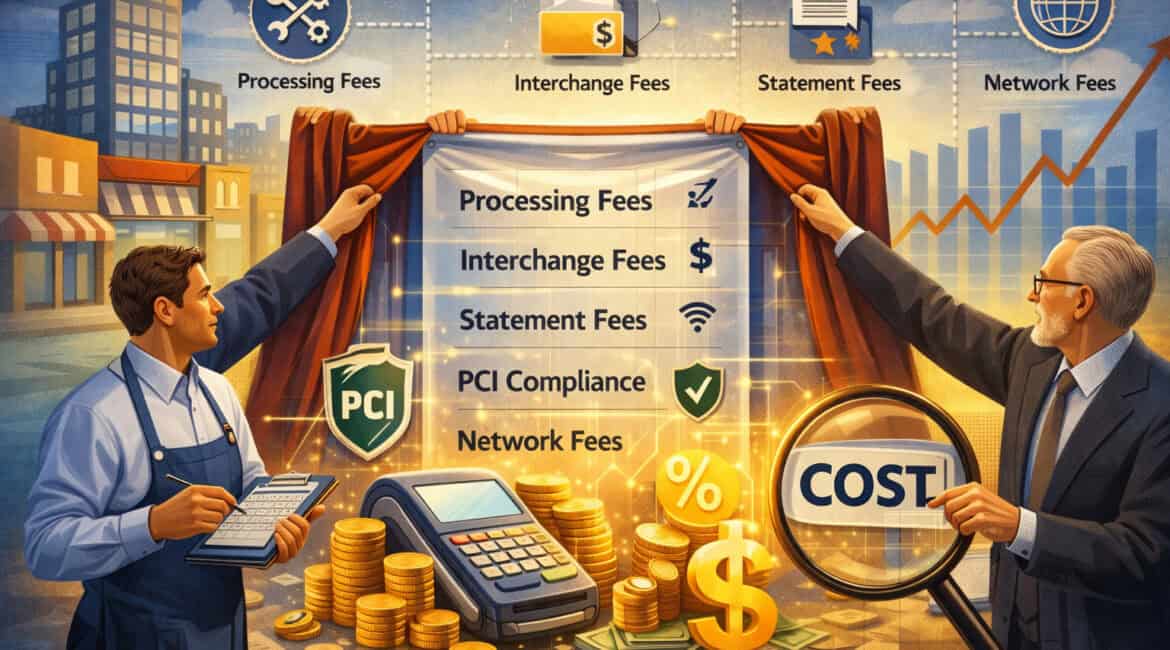
Cost transparency in merchant services is the difference between guessing what you pay to accept cards and knowing exactly what you pay, why you pay it, and what you can realistically lower. When cost transparency in merchant services is strong, your pricing is clear, your statement is understandable, and every...
How to Audit Your Merchant Processing Costs
Merchant processing costs can quietly become one of the biggest “invisible” expenses in your business. They’re often treated like a fixed cost—something you accept because payments are complicated. But merchant processing costs are not fixed. They’re a mix of pass-through fees, processor markup, and optional services that can be changed,...
How to Audit Your Merchant Services Statement for Savings
Auditing your merchant services statement is a critical activity for any business that processes credit cards, debit cards, or digital payments. A thorough audit helps you uncover hidden fees, incorrect charges, and opportunities to negotiate better rates or switch providers. This guide dives deep into each area you should examine,...
Why Small Businesses Overpay for Merchant Services

Small businesses often discover that merchant services cost far more than they expected. The bills look complex, the fee names are vague, and the pricing models are hard to compare. That combination makes merchant services feel opaque and expensive. This comprehensive guide explains in plain language where the extra costs...
What Are Merchant Services? A Complete Beginner’s Guide

Merchant services are the financial tools and systems that enable a business to accept and process payments from customers. This includes credit cards, debit cards, electronic checks (ACH), mobile wallets (Apple Pay, Google Pay), and online payments. In other words, merchant services turn customer payments into business funds. In today’s...